
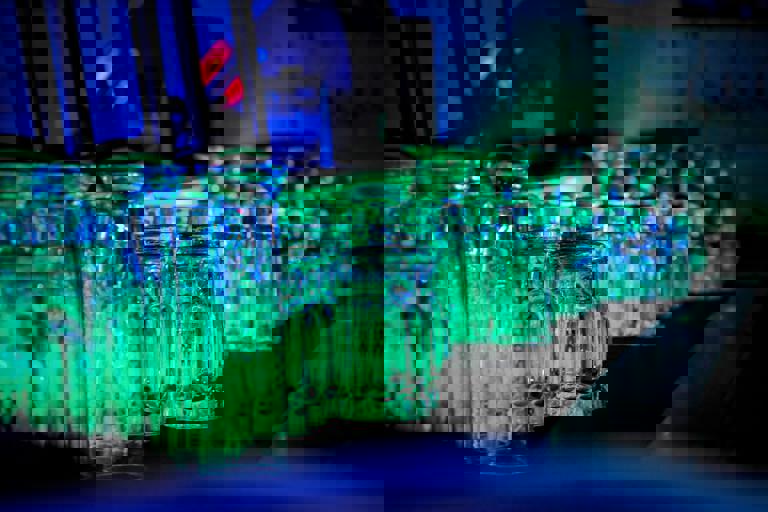
In the heart of a bustling city nightlife, a newly opened tech-themed cocktail lounge is causing quite a stir. At first glance, the shimmering LED walls and ambient cyberpunk lighting set a futuristic tone, but what truly captures attention is the bar’s mixology team—entirely composed of robots. These automated bartenders, with sleek metallic arms and precision sensors, are redefining what it means to enjoy a night out, seamlessly blending technology with tradition.
Customers entering the lounge are immediately greeted by the spectacle of robots whirring behind the counter, their movements choreographed to an almost balletic rhythm. Each robot is programmed to memorise hundreds of drink recipes, from classic mojitos to elaborate signature concoctions. The process is a visual delight, with articulated arms juggling bottles, measuring out perfect quantities, and shaking cocktails with mechanical finesse, all while a digital display tallies each order’s progress.
The novelty of a robotic bartender is attracting curious crowds eager to witness this marriage of engineering and hospitality. "It’s like stepping into the future—my drink was ready in under a minute, and it was the best martini I’ve had," remarked Julian Carter, a local resident who frequented the opening night. Observers are equally fascinated by the unexpected gentleness and accuracy with which the machines handle each ingredient, challenging preconceptions about the limitations of automation in hospitality.
But the robots aren’t just pouring drinks—they’re offering a new type of customer service. Programmers have equipped them with interactive touchscreens where guests can customise orders, request drink recommendations based on flavour profiles, and even play short trivia games while waiting. For many, the absence of small talk is a relief. "Sometimes, after a long day, you just want to enjoy a drink without the forced chit-chat," said visitor Priya D’Souza.
Despite the enthusiasm, opinions are divided about the lack of human bartenders. Some patrons express concern that the personal touch is lost when a machine mixes their cocktail. "I miss the stories and the banter you get from a real bartender," said veteran customer Edward Lang. However, the lounge’s management counters this by noting that robots allow for more consistency in drink quality and can handle higher volumes during busy hours, reducing wait times considerably.
Industry analysts are closely watching this venture as a potential harbinger for the future of nightlife. According to a 2023 survey by DrinkTech Insights, over 35% of UK-based bars and pubs are exploring automation to streamline operations and cut costs. This cocktail lounge stands as a real-world test case, providing valuable data on customer satisfaction and operational efficiency. Its success could pave the way for broader adoption across the sector.
Health and safety considerations also play a significant role in the rise of robotic bartenders. In an era marked by heightened hygiene awareness, especially after the pandemic, the use of machines helps minimise human contact and reduce contamination risks. Management assures guests that the robots undergo regular cleaning cycles, and ingredients are stored in sealed, temperature-controlled compartments, ensuring both cleanliness and freshness at all times.
From a technological standpoint, the bartenders are marvels of modern engineering. Each unit is powered by sophisticated AI, capable of learning from each order to refine its drink-making process. The software is regularly updated with new recipes and even seasonal ingredients, keeping the menu fresh and exciting. "We want the robots to be as dynamic as the city itself," said chief engineer, Lydia Benton, who leads the technical team behind the system.
A unique feature that draws particular intrigue is the robots’ ability to replicate complicated mixology techniques. Flair bartending, traditionally reliant on human dexterity, is re-imagined through programming that allows robotic arms to toss bottles and perform elegant pours. The lounge holds daily demonstrations where guests can watch the robots attempt complex feats, blending entertainment with efficiency in a manner rarely seen in traditional bars.
Local universities and tech companies have taken note of this innovative approach. Several institutions have partnered with the lounge to offer internships and apprenticeships, giving students hands-on exposure to advanced robotics in a real-world hospitality setting. "It’s an exciting fusion of theory and practice," noted Professor Alan Rutherford from a prominent university, "and a sign of how technology and service industries are converging in unexpected ways."
Economic implications of robot-powered bars are also under careful scrutiny. While automation reduces long-term labour costs, it raises important questions regarding employment. The lounge has responded by retaining a human staff for managing, troubleshooting, security, and guest relations. These employees handle tasks requiring empathy or complex decision-making, ensuring that technology complements rather than completely replaces the human workforce.
Reactions on social media have ranged from awe to scepticism, with hashtags like #BotBartender and #FutureOfNightlife trending locally. Some users post videos of their interactions with the machines, marvelling at precision-poured cocktails. Others debate whether the experience can ever match a human bartender’s hospitality. The conversation reflects broader social tensions surrounding the impact of automation on everyday life and the evolving definition of service culture.
As the night winds down and customers sip their final drinks, the lounge’s vision for the future is clear: to blend technology and tradition, efficiency and entertainment, in a way that reflects the evolving tastes of a tech-savvy generation. Whether robotic bartenders become the new standard or remain a niche attraction, their presence marks a bold experiment in hospitality that is sure to leave a lasting impression on the city’s vibrant nightlife scene.